
India's trade deficit with Russia continued to widen for the second consecutive year to $57 billion in the financial year 2023-24 (FY24), with Moscow becoming New Delhi's largest source of crude oil imports. All eyes will now be on Prime Minister Narendra Modi's visit to Russia during July 8-9, where he is set to meet President Vladimir Putin. This will be Modi's first visit to the Kremlin since the Russia-Ukraine conflict began over two years ago.

The government-backed Open Network for Digital Commerce (ONDC) is likely to start levying user charges in the current financial year.

The government is expediting visa-related issues to bring technicians to India from any country, not just China, as and when required, to ensure the smooth implementation of the flagship production-linked incentive (PLI) scheme aimed at boosting domestic manufacturing. "If those under the PLI scheme need to get their equipment installed, we try to expedite the ability to get technicians into India from any country, whichever it may be," Union Commerce and Industry Minister Piyush Goyal told Business Standard in an interview.

'Corporations that were recruiting 15 or 20 [students] have reduced the number to two or three.'

To burnish production-linked incentive (PLI) schemes, the government is considering an overhaul of some of them relating to sectors such as textiles and pharma, and making incentive payments quarterly, officials in the know said. In a bid to cut the delay in processing incentive claims, the government is looking at switching to a quarterly disbursement of incentives. Currently, in most schemes, incentives are annual.

'Patients under the scheme may ultimately have to go to private hospitals.'

'The NEET-PG is the only exam for admission to MD, MS and PG Diploma courses.' 'Many doctors take time off from work to prepare for it, while others study during their long hospital shifts.'

The commerce department has reaffirmed its plans to launch the 'Trade Connect' e-platform to help exporters connect with stakeholders of international trade, as a part of the new government's 100-day action plan, a senior government official said.

Ayush refers to the six Indian systems of medicines, namely Ayurveda, Yoga and Naturopathy, Unani, Siddha, Sowa-Rigpa and Homeopathy are majorly prevalent in the country.
Another priority in the first 100 days could be the launch of an e-platform -- Trade Connect -- to help exporters connect with stakeholders of international trade.

The move to expand the health insurance scheme's coverage comes at a time when several hospitals have complained of delays in reimbursement related to the procedures performed under the scheme.
The Centre is considering a proposal on increasing coverage under the Ayushman Bharat scheme to Rs 10 lakh from the current Rs 5 lakh.

'Our priority remains brownfield expansion, and in the next few years, we plan to increase our capacity to around 6,000 beds.'

'The youth is stressed and students are depressed.'

As Chandigarh braces for a fierce contest between Congress candidate Manish Tewari and the BJP's Sanjay Tandon, its industry leaders harbour a fervent wish: Replicate the success of the National Capital Region model in this Union Territory.
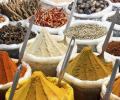
The government is formulating guidelines on the use of ethylene oxide (ETO) in samples of spices for the domestic market and exports, people aware of the matter said, as it plans to step up efforts to make quality checks more stringent. ETO, a flammable, colourless gas, is typically used as a disinfectant. It is also used as a sterilising agent and an insecticide to reduce microbial contamination in spices. However, its use is considered carcinogenic, beyond permissible limits.

Exports of 19 major commodities, including petroleum products, coal and marine items, saw growth in terms of volume during April 2023-February 2024, even as they witnessed contraction in value terms during the same period. Government officials said the rise in export volume despite a decline in value implies that these commodities show a stronger market demand.
Countries that raised concerns about the quality of Indian spices have called for urgent attention and action, Delhi-based think tank Global Trade Research Initiative (GTRI) said on Wednesday. The stakes are high since India exported spices worth about $692.5 million to the United States (US), Hong Kong, Singapore, Australia and Maldives in the financial year 2023-24 (FY24), it said. During FY24, India's spice exports were worth $4.25 billion, accounting for a 12 per cent share of the global spice exports.

Taiwan is keen to collaborate with India and help it become a leader in the semiconductor space, Jason Ho, chairman of the Taiwan Chamber of Commerce in India, said, asserting that the Taiwanese companies have the supply chain for things that the Indian market needs. Manufacturing semiconductors - used in electric and hybrid cars, drones, and communication devices - is fairly complicated, entails huge investment, and can be a cumbersome process.
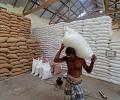
Exports of high-quality basmati rice from India grew by 22 per cent to $5.2 billion during April 2023-February 2024, amid robust demand, primarily from West Asia. According to data compiled by the commerce department, exports of basmati rice increased to 4.68 million metric tonnes (MMT) in April-February, from 4.1 MMT during the same period a year ago, registering a growth of 14 per cent.
 © 2026 Rediff.com - Advertise with us - Disclaimer - Privacy Policy - Sitemap - Feedback - About us - Terms of use - Grievances